Showing posts with label shawl. Show all posts

Monday, May 12, 2008

Cabling on the Edge

In the many years I have knit sweaters with cables, I never knit (or even thought of knitting) a cable right at the edge. But the beautiful and original pattern by Anna Dalvi for the Mystic Light Shawl KAL includes a cable along the short edges of the triangular shawl. The cable provides for nice firm edges, as well as complementing the design, which also includes a cable down the center.

It was quite daunting to do a cable right at the edge at the beginning of the Knit-Along. Upon the advice of my sister, who managed to start this shawl before I did, I learned how to do the cables without a needle using this tutorial by Wendy Johnson. What a revelation that was! Once you get the hang of it, it is far easier than looking for the cable needle, juggling it around, knitting the cable, and putting it down again (hopefully in a place where it won't get lost before the next cable). It felt awkward at the beginning or the end of a row, but after a few tries it seemed perfectly natural.

Here is the finished shawl and a detailed view of the cables:


Pattern: Mystic Light by Anna Dalvi
Yarn: 2 skeins Fleece Artist Merino Sock 2/6 (764 yards)
Needles: US #7
Size: 34" x 68"

Another interesting aspect of this pattern is that it calls for fingering weight yarn, so it went much faster than most lace. The yarn (amazingly enough, I used the yarn suggested by the designer) is nice and soft, with good drape, and it should offer a little more warmth than lace-weight fabrics.

My very next project after completing this shawl is the Cabled Tee, a short-sleeve sweater with a cable down the front that branches up along the neck. Even after looking at the picture, it didn't occur to me that the cable along the v-neck was right at the edge. (Surely there was a stitch or two border beyond the cable???) In fact, the cable is right at the edge, just like the shawl. It really isn't any harder than a standard cable, though it can be tricky to move those stitches around without dropping the end stitch in the process.

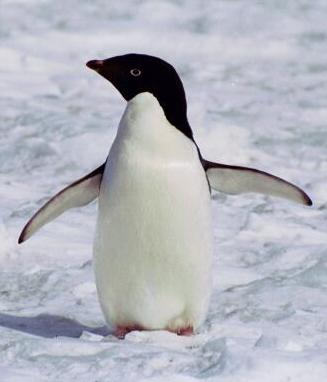
What's next? A break from cables, though I'm sure there will be more in the not-too-distant future. Yesterday was the Cast-on for the Slow Bee Mystery Shawl, and here is the first half of the first clue. The recommended color is "something really cold, like white or natural yarn, icy blue or very dark violet or dark blue" with seed beads. After considering both Teal and Ice Blue Zephyr, both with silver-lined crystal beads, I finally decided on the teal, though both remind me of this photo that I took in Antarctica:

Thursday, October 04, 2007

Finished Green Objects

September was a month for finishing green objects.

The lovely Bee Fields Shawl is actually a springlike green-and-yellow mix that makes me smile whenever I look at it. The hand-dyed laceweight merino from Wooly Wonka Fibers is a perfect fiber for this stole. It has a beautiful drape and the subtle color changes do not at all detract from the complex lace pattern.

Pattern: Bee Fields Shawl by Anne Hanson
Yarn: Hand-dyed merino laceweight by Wooly Wonka Fibers, approx. 1200 yds.
Colorway: Tupelo Gold (actually greener than gold, but lighter than it looks in the photo)
Size: 74" x 36"
Needles: Addi Lace Needles #US 5

This may have been the most difficult lace project I have ever knit. The instructions were comprehensive and detailed, even when they seemed to make no sense at all, they were right. I enjoyed it immensely and look forward to doing more of Anne's patterns in the future.

Another green project completed in September was the Filey Sweater by Alice Starmore. I was inspired to knit a Gansey by Liz Lovick's Gansey workshop in the EZasPi group. After poring over patterns and books my eye always came back to the Filey style. I found this pattern in Alice Starmore's Fishermens' Sweaters, which had been on my bookshelf for quite some time. The only problem was that the pattern was written for a Rowan yarn that has 20% shrinkage in length, and the yarn I had chosen for it had very little shrinkage. (Even less, it turned out, than the swatch, which I must have washed more aggressively than the finished sweater.)

Pattern: Filey by Alice Starmore in Fishermen's Sweaters
Yarn: Frangipani Guernsey 5 Ply Wool from Frangipani approx. 1.5 cones for XL size
Needles: Denise US #5
Modifications: Much recalculation was necessary because of the difference in gauge and shrinkage rate of the substitute fiber. Additional seed stitch panel added on sides after I initially failed to take into account the effect of gauge of cables.

My calculations weren't quite right so the sweater is a little bigger than it should have been, but it's hard for sweaters to be TOO big... I imagine wearing it with two layers underneath once the weather turns cold.

As if that weren't enough green, I decided to use some of the leftover yarn to make this hat:

Pattern: Gretel Beret by Ysolda S. Teague
Yarn: Frangipani Guernsey 5 Ply Wool from Frangipani
Needles: Denise #5 & 7
Size: Slouch (largest of three sizes in pattern)
Modifications: Because of an error and various efforts to compensate, the top of the hat isn't quite right, but I still like the way it looks.

There is still one green UFO awaiting completion, the Fiddlesticks Garden Shawl, whose edging goes on and on and on... Maybe October will be the month to finish that one.

Saturday, September 15, 2007

Icelandic Lace - Ready for Winter

The beginning of fall is always a difficult time for me. It means that the glorious warm sunshine of summer is coming to an end, and the frigid gloom of winter is about to descend after a brief autumnal interlude. On my personal calendar we have two months each of spring, summer, and fall, and then six months of winter. O that it were reversed!

This year I greeted fall, which begins, according to my personal calendar, on the first of September, by knitting the Icelandic Lace Shawl. The yarn isn't terribly heavy, so it isn't difficult to knit even when the weather is still warm in summer's last gasps. The neutral colors – cream and several shades of gray and brown – are certainly reminiscent of stark winter landscapes, a real contrast to the spring-like light green and yellow of the Bee Fields Shawl!

This shawl was finished in record time, but I'm not sure why. The pattern wasn't difficult, though I did make several mistakes, and despite some serious tinking there are still a few which will remain. It may just be that I was able to spend more time on it than usual because it didn't require heavy concentration.

Here are a couple of before and after (blocking) pictures. You can see why the errors didn't show up clearly in the "before" state.


(The pinkish and yellow colors in the photo on the right are from the blocking squares under the shawl and not the shawl itself.)

I did make several changes to the pattern. About half way through I became nervous that it would be too small. Because of the interesting construction it was tricky to figure out if I could just add some extra rows, but in desperation I tried. I also switched from #6 to #7 needles at the same time. In the "edging" part (the edging is a rather wide section beyond the wide white band) I added a couple of extra rows to the brown bands and then repeated the medium and dark gray bands (though narrower than in the first part). (I also used the dark gray for the final bind-off instead of black.) I did the optional edging at the top in order to obtain another inch, but I think it finishes off the shawl nicely.

After all that, the final dimensions are very close to the dimensions given in the pattern (76" x 37"). That seems odd, because I used the yarn called for in the pattern, I was using #6 needles instead of the recommended #4's, and my gauge is generally average (though I confess to not swatching this time). It may be that a more aggressive blocking would gain another inch or two in each direction, but that decision will have to wait until it is completely dry and I can try it on.

Even if it is a little smaller than I would like (and how often that seems to be the case!) I expect to get a lot of use out of this shawl when the Season of Suffering arrives this year.